
Description
Characteristics of Electrolysis
The word electrolysis is a combination of Greek words, electron and lysis, and was first introduced by Michael Faraday in the 19th century. Electrolysis has been used as a tool to study chemical reactions and obtain pure elements much before the term was coined.
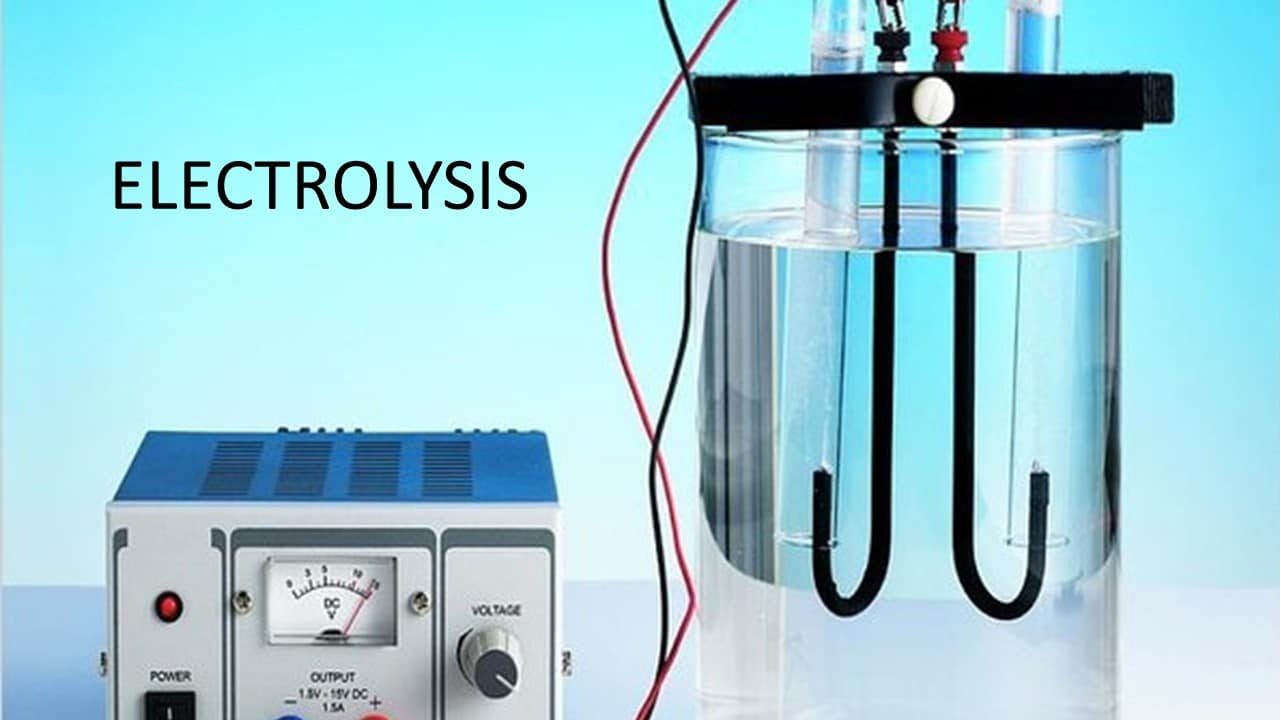
Electrolysis is a technique in which a direct current (DC) is passed through an ionic substance (that is either molten or dissolved in a suitable solvent) in order to produce chemical reactions at the electrodes and separate materials. The main components required to achieve electrolysis are an electrolyte, a direct current and electrodes.
In this lesson, you will be learning about the process of electrolysis in detail.
A few important things we will learn:
Electrolytic Cell | Electrolysis | Electrolytes | Strong Electrolytes | Weak Electrolytes | Non-Electrolytes | Cations | Anion | Oxidation | Reduction
Factors Influencing Selective Discharge of Ions
Position of the ions in the electrochemical series
Concentration of the ions in a solution
Nature of the electrode
Applications of Electrolysis
What if you found a rusted steel object or a rusted vintage artefact at home and wanted to clean it? Well you can use the process of electrolysis to clean it by using materials found at home: a plastic bucket, tap water, rebar, washing soda, baling wire and a battery charger.
Since the process of electrolysis separates non-metallic particles from the metallic ones, this process is used in cleaning metallic objects, from old coins, artefacts, rusted parts of automobile engines.
Free
Free
Free access this course
-
LevelIntermediate
-
Total Enrolled3
-
Last UpdatedMay 16, 2024
Hi, Welcome back!
Material Includes
- 🔥 Live Interactive classes with in-class doubt solving
- ⭐ Weekly Test and Quiz with instant tracking for progress
- ⚙️ Revision of the course after testing
- 👋 Fortnightly Parents and Tutor interactions
- 🌷 Expert monitoring of student's learning progress
- 👨👩👧👧 Daily communication over call, whatsapp and mail
- 💻3 hours on-demand video
- ✍4 downloadable resources
- ⌛Access for entire Academic Year
- 📱Access on mobile and Desktop
- 📋Assignments and review of the same
- 💡Tests and Correction by Board paper checkers
- 🏅Certificate of completion and Live tracking with Grade book
Course Duration:
0
Course level:Intermediate
Enrolled:3
About Course
In this section will learn this following chapterts:
1.examples of electrolysis-1
2.examples of electrolysis-2
3.electroplating and electrorefining
Course Curriculum
ELECTROLYSIS – 18 APRIL 2023 – INTRODUCTION TO ELECTROLYSIS AND TERMS RELATED
-
INTRODUCTION TO ELECTROLYSIS – CORE CONCEPT – INTRODUCTION
06:52 -
CONCEPT OF ELECTROLYSIS – CORE CONCEPT – ANIONS AND CATIONS
10:18 -
ELECTROLYSIS – SUPPORT MATERIAL – REACTIONS AT CATHODE AND ANODE
01:02 -
CONCEPT OF ELECTROLYSIS – SUPPORT MATERIAL – ANIONS AND CATIONS
04:00 -
ELECTROLYSIS – SUPPORT MATERIAL – INTRODUCTION CHARACTERISTICS
00:56 -
ELECTROLYSIS – PHYSICAL CLASS – IONIZATION AND DISSOCIATION
11:13 -
ELECTROLYSIS – PHYSICAL CLASS – PROCESS OF ELECTROLYSIS
07:40 -
ELECTROLYSIS – PHYSICAL CLASS – DIFFERENCE BETWEEN ELECTROLYSIS AND ELECTRIC CURRENT AND STRONG AND WEAK ELECTROLYTES
23:23 -
INTRODUCTION TO ELECTROLYSIS – CORE CONCEPT – INTRO & STRONG AND WEAK ELECTROLYTE
14:12 -
CONCEPT OF ELECTROLYSIS – CORE CONCEPT – CONDUCTION BY IONS AND ELECTROCHEMICAL SERIES
12:25 -
ELECTROLYSIS – PHYSICAL CLASS – OXIDATION AND REDUCTION
12:49
ELECTROLYSIS – 24 APRIL 2023 – ELECTROLYSIS OF THREE COMPOUNDS – LEAD BROMIDE, WATER, COPPER SUPHATE
-
ELECTROLYSIS – PHYSICAL CLASS – PREFERENTIAL DISCHARGE METHOD
17:52 -
CONCEPT OF ELECTROLYSIS – CORE CONCEPT – ELECTROLYSIS OF SODIUM CHLORIDE
10:12 -
ELECTROLYSIS – PHYSICAL CLASS – ELECTROLYSIS OF LEAD BROMIDE
07:12 -
ELECTROLYSIS – PHYSICAL CLASS – ELECTROLYSIS OF ACIDIFIED WATER
12:26 -
CONCEPT OF ELECTROLYSIS – CORE CONCEPT – LEAD BROMIDE AND ACIDIFIED WATER
10:48 -
ELECTROLYSIS – PHYSICAL CLASS – ELECTROLYSIS OF COPPER SULPHATE USING COPPER ELECTRODES
10:42 -
CONCEPT OF ELECTROLYSIS – CORE CONCEPT – ELECTROLYSIS OF COPPER SULPHATE
12:52
ELECTROLYSIS – 25 APRIL 2023 – EFFECT OF ELECTRODES AND ELECTROLYTE ON PREFERENCE DISCHARGE
-
ELECTROLYSIS – PHYSICAL CLASS – ELECTROLYSIS OF COPPER SULPHATE USING DIFFERENT ELECTRODES
07:59 -
ELECTROLYSIS – PHYSICAL CLASS – ELECTROLYSIS OF LEAD BROMIDE AND ACIDIFIED WATER
17:41 -
ELECTROLYSIS – PHYSICAL CLASS – PREFERENTIAL DISCHARGE CONCENTRATION OF IONS AND E C
23:13 -
ELECTROLYSIS – PHYSICAL CLASS – PREFERENTIAL DISCHARGE – NATURE OF ELECTRODE
05:44
ELECTROLYSIS – 3 MAY – ELECTROPLATING AND ELECTRO-REFINING
-
ELECTROPLATING AND ELECTRO-REFINING – CORE CONCEPT – ELECTROPLATING
22:33 -
ELETROLYSIS – PHYSICAL CLASS – CONDITIONS FOR ELECTROPLATING
10:03 -
ELETROLYSIS – PHYSICAL CLASS – ELECTROPLATING WITH SILVER
10:47 -
ELETROLYSIS – PHYSICAL CLASS – ELECTROPLATING WITH NICKEL
04:43 -
ELECTROPLATING AND ELECTRO-REFINING – SUPPORT MATERIAL – ELECTROREFINING AND ELECTROPLATING
06:00 -
ELECTROPLATING AND ELECTRO-REFINING – SUPPORT MATERIAL – ELECTROLYTIC CONDUCTORS AND SEMICONDUCTORS
05:00
ELECTROLYSIS – ONLINE REVISION CLASS – 26 AUG 2023
-
ELECTROLYSIS – REVISION CLASS – ELECTROLYSIS OF LEAD BROMIDE AND COPPER SULPHATE WITH INERT AND ACTIVE ELECTRODE
26:04 -
ELECTROLYSIS – REVISION CLASS – ELECTROPLATING
16:55
ELECTROLYSIS – MAY -2024
-
ELECTROLYSIS – PHYSICAL CLASS – ACIDIFIED WATER AND MOLTEN LEAD BROMIDE
20:04 -
ELECTROLYSIS – PHYSICAL CLASS – COMPARISON OF CURRENT THROUGH A CONDUCTOR AND ELECTROLYTE
20:16 -
ELECTROLYSIS – PHYSICAL CLASS – COPPER SULPHATE WITH INERT AND ACTIVE ELECTRODES
12:55 -
ELECTROLYSIS – PHYSICAL CLASS – ELECTROCHEMICAL SERIES AND PREFERENTIAL DISCHARGE
19:03 -
ELECTROLYSIS – PHYSICAL CLASS – ELECTROLYTIC REACTION AND IONS
13:45 -
ELECTROLYSIS – PHYSICAL CLASS – ELECTROPLATING WITH SILVER AND NICKEL
18:20 -
ELECTROLYSIS – PHYSICAL CLASS – ELECTROREFINING OF COPPER
10:00 -
ELECTROLYSIS – PHYSICAL CLASS – INTRODUCTION TO ELECTROLYSIS AND DECOMPOSITION OF IONIC COMPOUNDS
14:26 -
ELECTROLYSIS – PHYSICAL CLASS – PREFERENTIAL DISCHARGE REASONS
17:30 -
ELECTROLYSIS – PHYSICAL CLASS – STRONG WEAK AND NON ELECTROLYTES
18:37
Student Ratings & Reviews
No Review Yet